🌿 Mandirigma 🌿
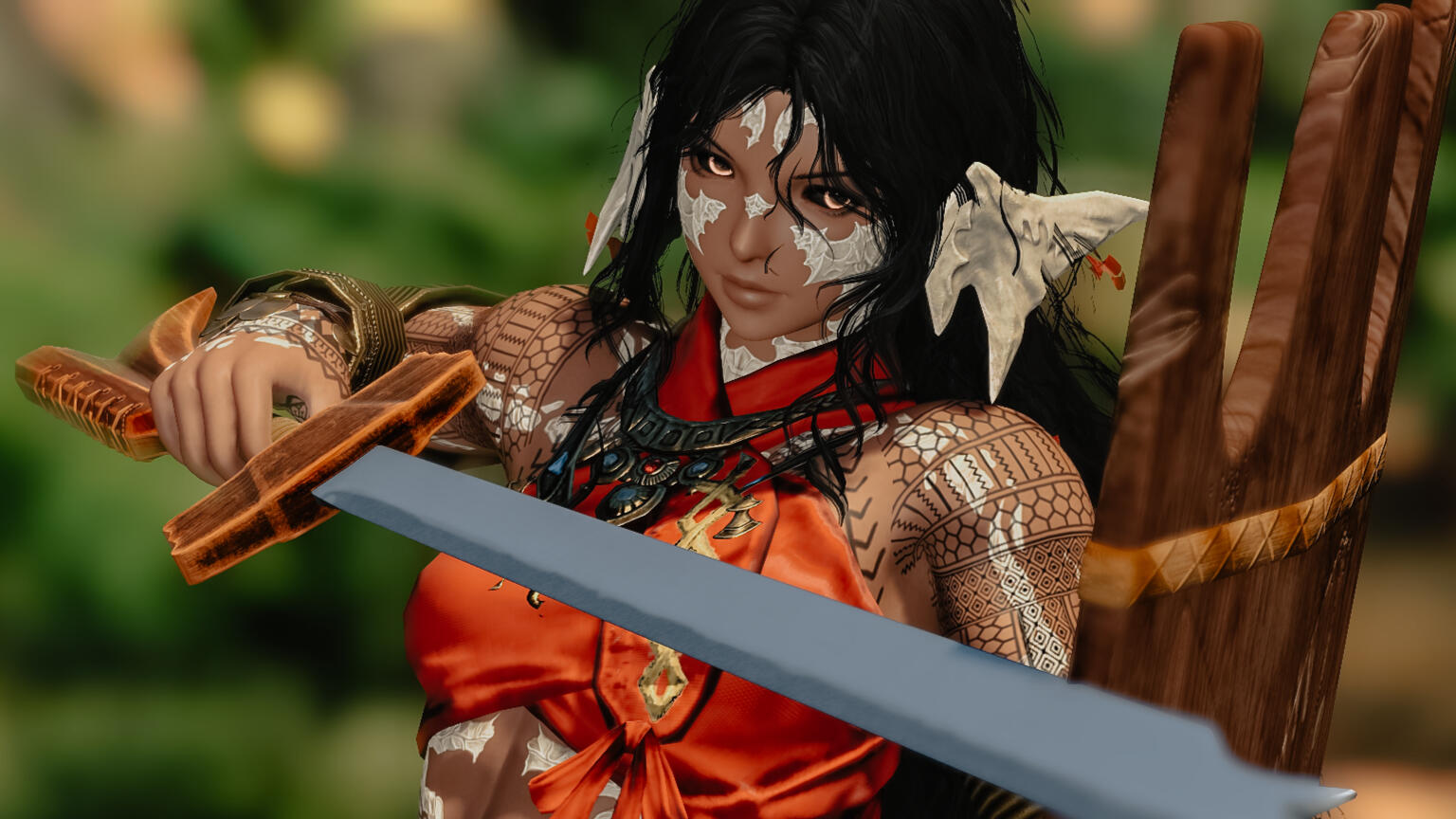
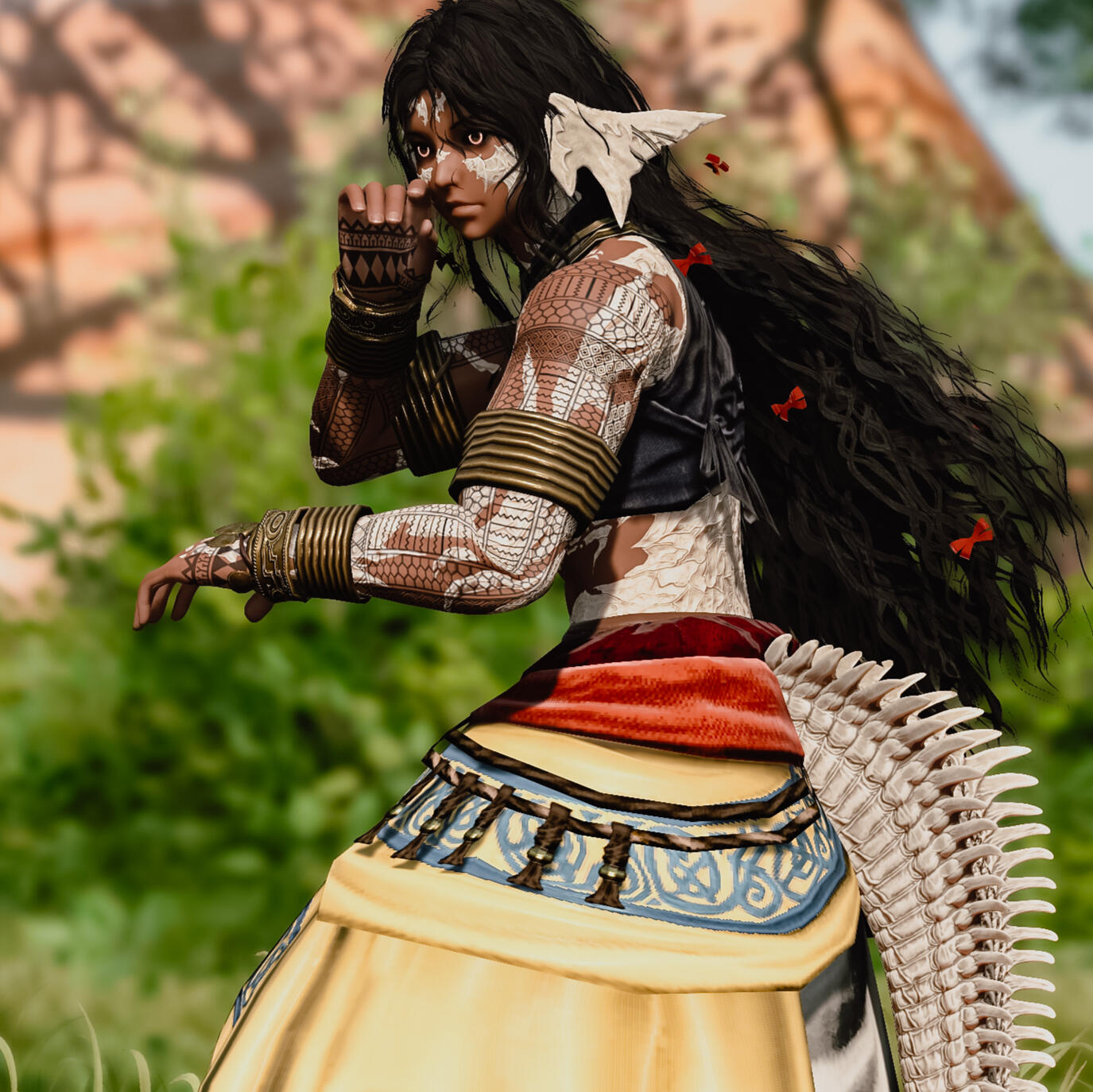
❝Katitibay ka Tulos. Sakaling datnang agos! Ako'y mumunting lumot sa iyo'y pupulupot.❝an exploration of : A pre-colonial Filipino mythology inspired OC based on the Islands of Sina Una and re-imagined for Final Fantasy XIV.Dynamis | Marilith | PST
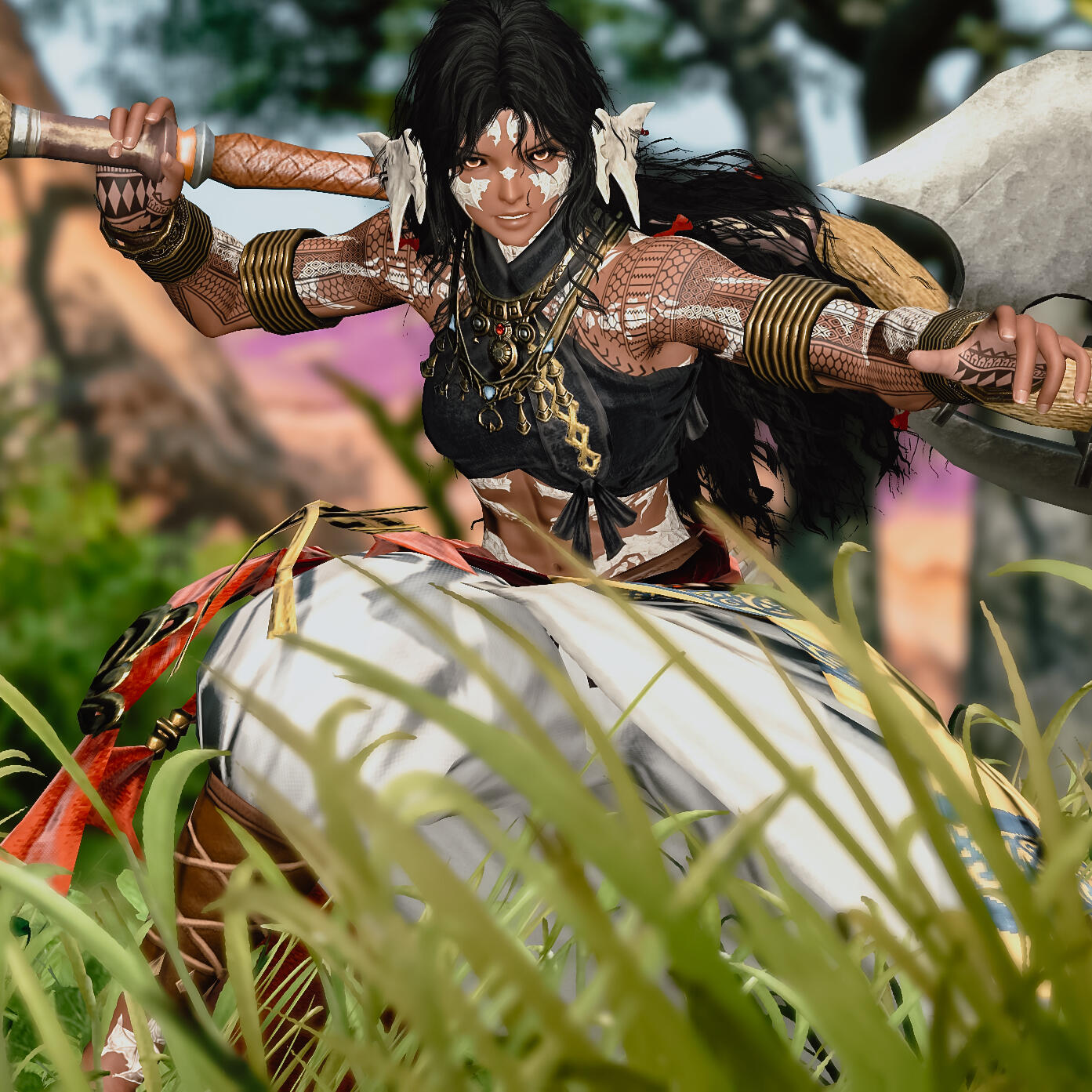
roleplay hooks
▍ ❝ FISHERWOMAN.
You have either heard of or seen a peculiar looking woman walking around the wilderness of both Eorzea and Othard carrying fishing equipment. Perhaps you are a fellow angler or someone who is simply curious about what she is trying to catch.▍ ❝ FOREIGNER.
There is a woman with an accent that no one can quite place making a name for herself in Vylbrand as a capable deckhand and mercenary. Those inquiring about her to those that have encountered her have similar stories. They say that she claims to be from a region called the Anguna Archipelago but as far as you know there are no maps or charts that make mention of such an archipelago. To sate your curiosity, you decide to ask the woman herself about her origins to get some definitive answers. If you can parse out her accent, at least.
▍ ❝ FISHMONGER.
Word has spread around Ul'dah that there is a fishmonger offering her services to those looking for particular types of wavekin either for their pantry or for their aquariums. A particular fisherwoman with an odd accent has made a name for herself as a reliable source of tri-colored carp for well to do Ul'dah merchants and nobles.▍ ❝ FROM ANGUNA.
Specific to OCs from Yedlihmad or Alnair - You've heard tales of the "lost cousins" that broke off from Azladaal Khan's group so many centuries ago, but have never met one yourself. A rumor from back home has reached you that a resident of the Anguna Archipelago has been banished and was seen doing odd jobs around Yedihmad and turning in marks in Radz-at-Han. Wanting to learn more about the archipelago and its people, you seek her out.
character guidelines
▍ ❝ ONE.
This character and her homeland of Malaya are based on the world created in the DND source book Islands of Sina Una and the legends contained therein. It draws heavily both from that source book and pre-colonial Filipino mythology. It is a journey of reconnection for the writer and also something just for fun. The mythology being drawn from is precious to the writer and approached with respect and good faith with adjustments made to fit into the broader world of Final Fantasy XIV.▍ ❝ TWO.
The writer is 21+ and will not interact with anyone who is not at least 18+. Though not her main focus, Luwalhati's story does contain some more mature and dark themes. These plot points touch on loss, grief, death, murder, and other heavy topics. While Luwalhati will, for the most part, be engaging in slice of life RPs - heavier RPs are welcomed with informed consent and, as stated in the beginning, with writers who are at least 18+.
▍ ❝ THREE.
The island of Malaya is located in the Anguna Archipelago located to the south of Thavnair. Having previously been landed on by a Yedlihmadi sailor and subject to occasional trade, Thavnairian characters may have already heard of Luwalhati's tropical homeland. Other characters may not have heard of it at all unless they were scholars who have dipped into Thavnairian archives to discover written accounts of this far flung land.▍ ❝ FOUR.
While shipping is not entirely off the table, it's not a focus or priority for Luwalhati. That being said, if it was to happen it would be a rather slow burn as that is the writer's preferred pace. Additionally, Luwalhati is a monogamist and will not engage in relationships with more than one person or with someone who has multiple partners.
Luwalhati Dalisay
GENERAL .
• name : Luwalhati Dalisay
• alias : Hati
• age : 30
• gender : She / Her
• orientation : Pansexual
• species : Au Ra - Raen
• occupation : Sailor / Mercenary / Fisher
• Language : Common / Wikang Balete
• voice claim(s) : Sophia LafortezaPHYSICAL .
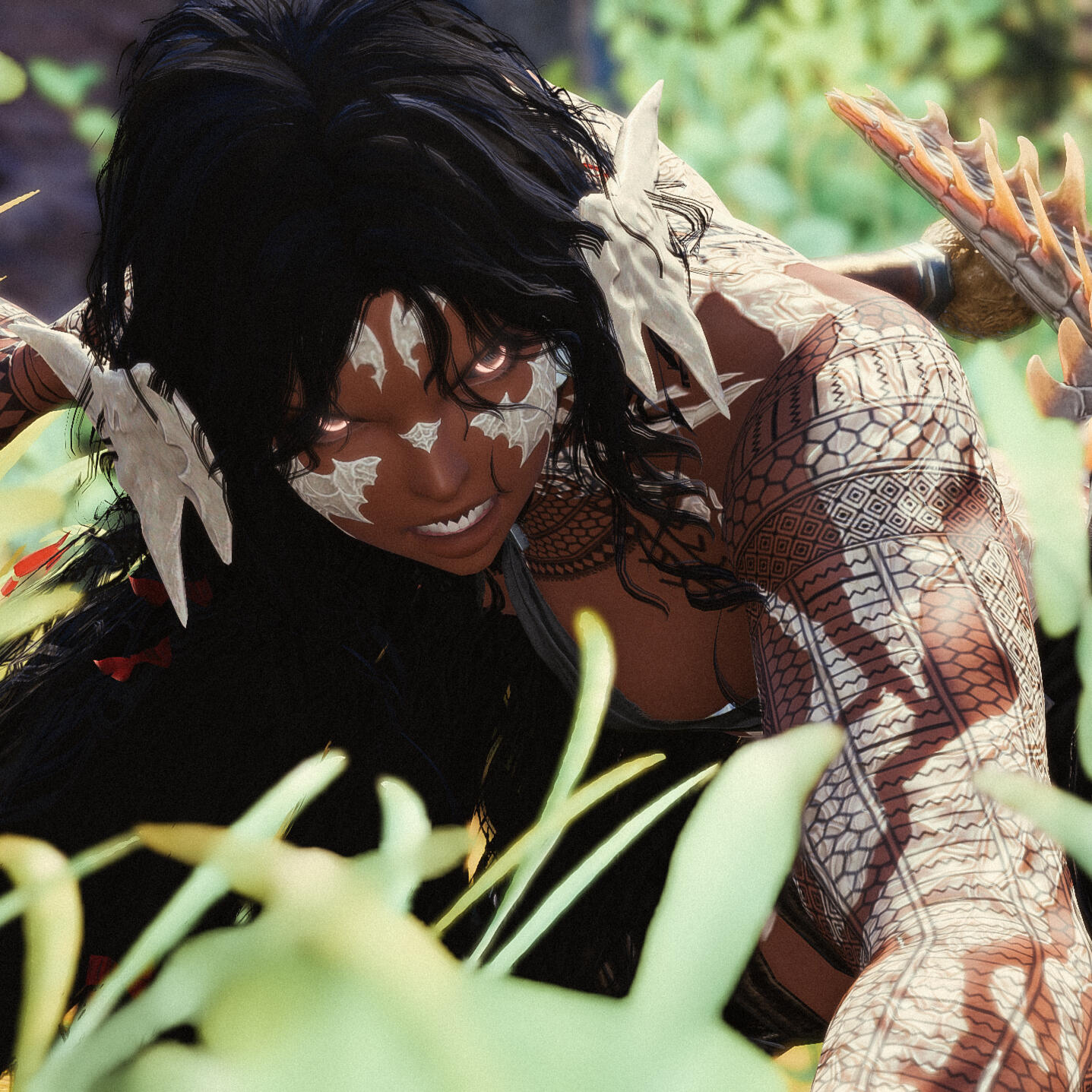
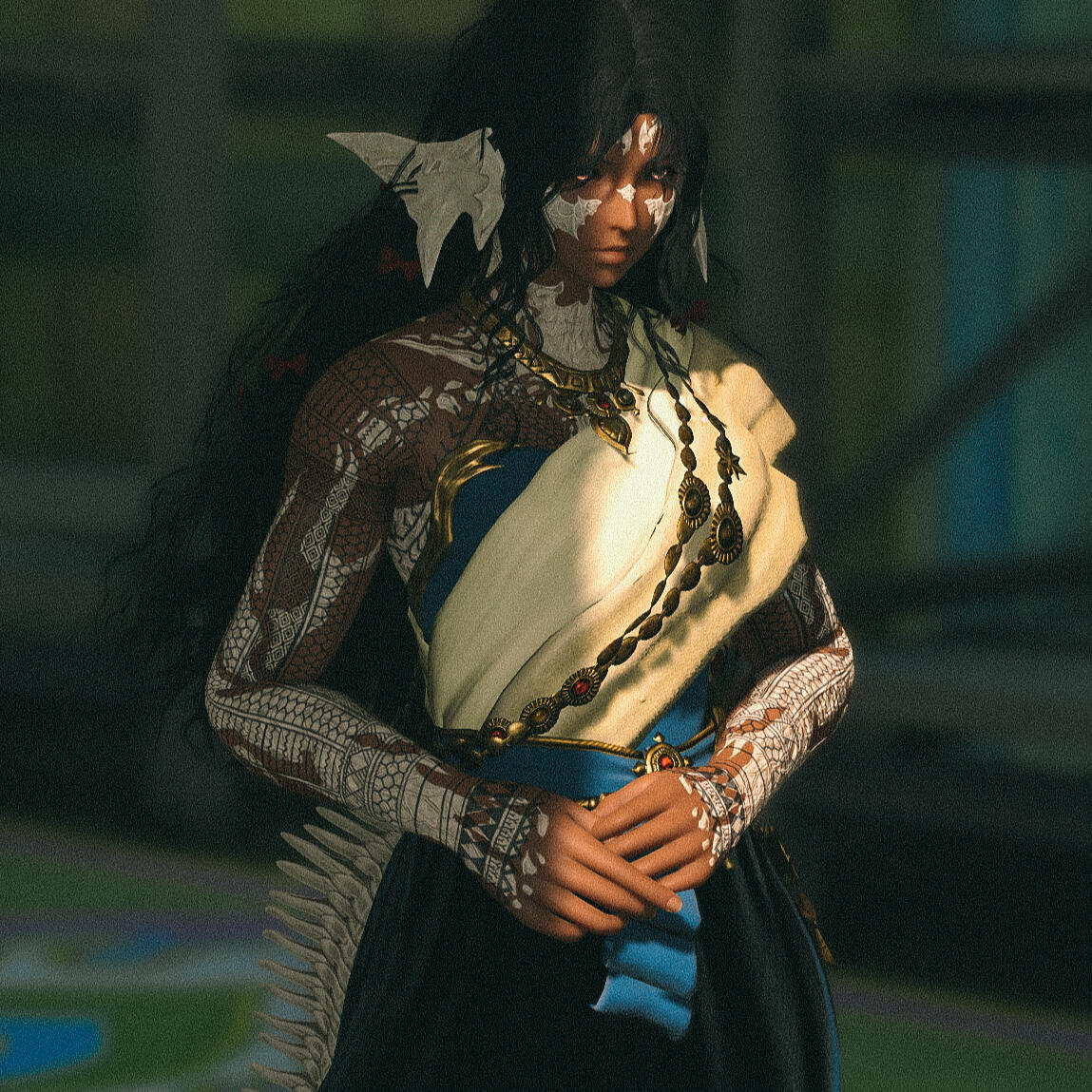
• eyes : brown with red-orange limbals
• hair : black
• height : 5'4"
• weight : [Redacted]
• build : Toned
• clothing : Whatever she can affordMENTAL .
• alignment : Neutral Good
• traits : Excitable, Aggressive, Extroverted, Curious
• likes : Open Seas, Thick Forest / Jungles, Fishing
• dislikes : Overconfidence, Deceit, Unseasoned Food
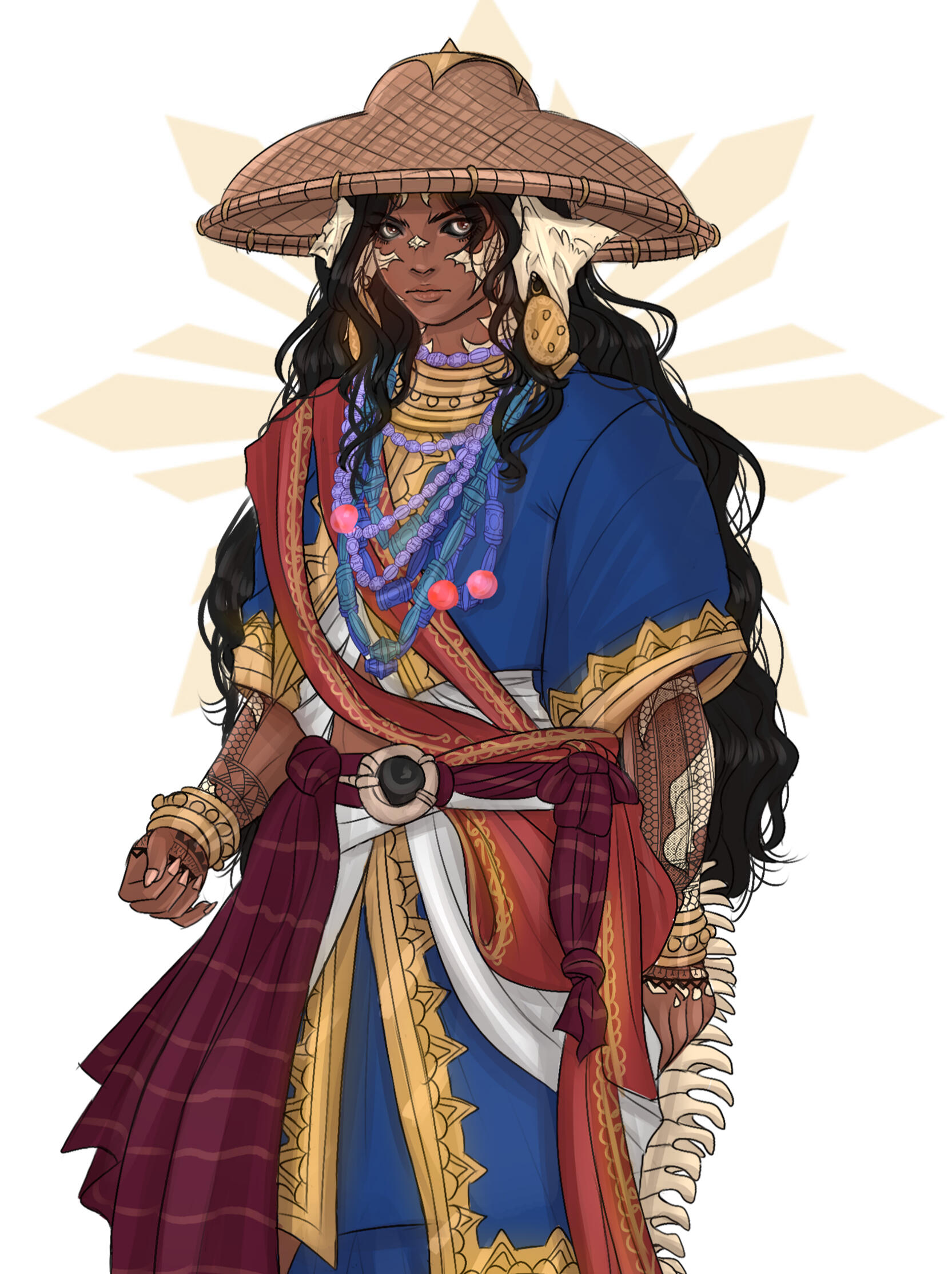
Art by Basil
BACKGROUND.
• birthplace : Tawalisi, Malaya
• current residence : Western La Noscea
• nuclear family : Halina - Mother, Lumanlan - Father, Manalo - Brother
• extended family : Dalisay Clan of Tawalisi
• pets : Puti - Dove
• significant other : NA ❝ + POSITIVE ATTRIBUTES : Friendly and open minded. Willing to lend a hand and loves learning about cultures outside of her island. Will try any dish at least once or maybe twice if she's not sure the first time. Cares deeply for her friends and family. Physically strong and capable in combat.❝ - NEGATIVE ATTRIBUTES : Sometimes impulsive. Known to hold a grudge, but is bad at voicing why she's upset with someone. Slight problem with authority figures.
❝ Once upon a time... off the coast of Puthwanan, one of the seven major islands of the Anguna Archipelago, on the island of Malaya lived a renowned clan, the Dalisay. The Dalisay clan have sired many great leaders and warriors. Notable Datu and Babylan. These leaders each assembled a group of their most able bodied warriors to form an elite group, the Maharlika. Among their ranks was a young Luwalhati who was trained since birth to be a guardian of her people. However, ever impatient and impulsive, Luwalhati sought a quick path to glory that would ultimately lead her to be driven away from the home she loved.Among the many legends of the peoples of Malaya was the existence of an artifact said to be hidden somewhere in Puthawanan. The Agimat ni Bakunawa was an ancient artifact said to have been torn from the great serpent during her harrowing duel with Haliya. Luwalhati had heard of these tales and also learned that it's location could be discerned. She was convinced that this small slice of the serpent's power would be what her people would need to have an edge against the other islands should their peace ever come apart. Datu Halina, her mother, forbade her from pursuing this legend. She stressed to her daughter that such a powerful artifact should stay hidden and that surely it would be cursed.
Luwalhati did not heed her mother's warnings. She managed to convinced other young warriors and even another Maharlika to join her on an expedition to seek out the legendary artifact. This expedition would be fraught with danger and ultimately lead to disaster. As they honed in on the possible location of the artifact, an unknown entity attacked the expeditionary force resulting in the death of everyone save Luwalhati and another young warrior. She returned to Tawalisi defeated. Due to the loss of life resulting from Luwalhati's rash decision, Datu Halina had no choice but to banish her eldest daughter. She was afforded more mercy than most as she was given a boat and ample supply to make it to Alnair. Not only that, her long time friend, Buaya, was allowed to join her at his request. And thus, the once proud Maharlika of Malaya was driven from her home to foreign shores a Maharlika no longer but a Tinatwa - an outcast.She eventually landed in Alnair and then subsequently made her way to Yedlihmad wherein she sought a new life. Still, despite its distance from her home, Yedlihmad still felt too close and so Luwalhati resolved to move to the mainland and find a way to make a living there. She now finds herself in Limsa Lominsa plying her trade as a mercenary, sailor, and fishmonger.
photo gallery
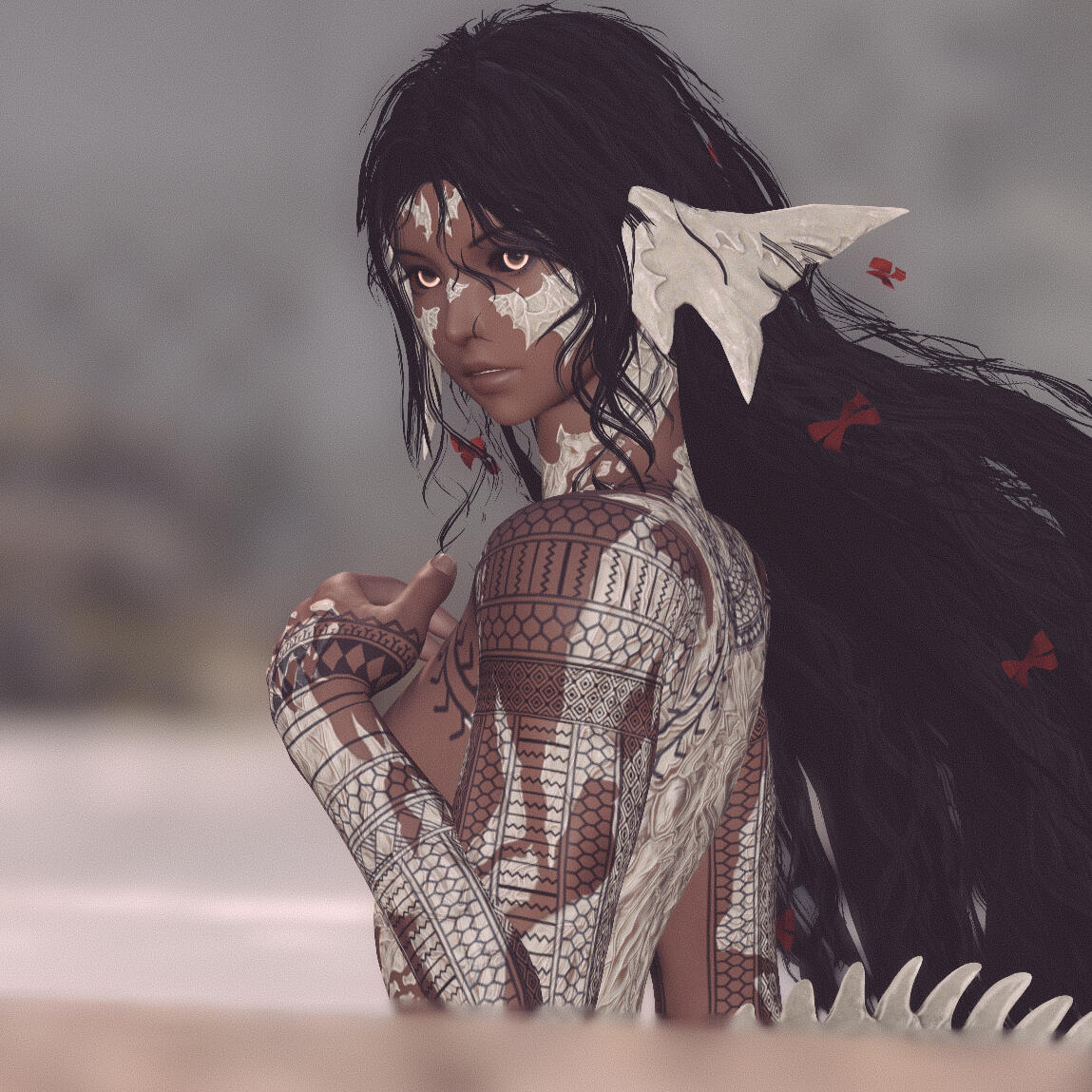
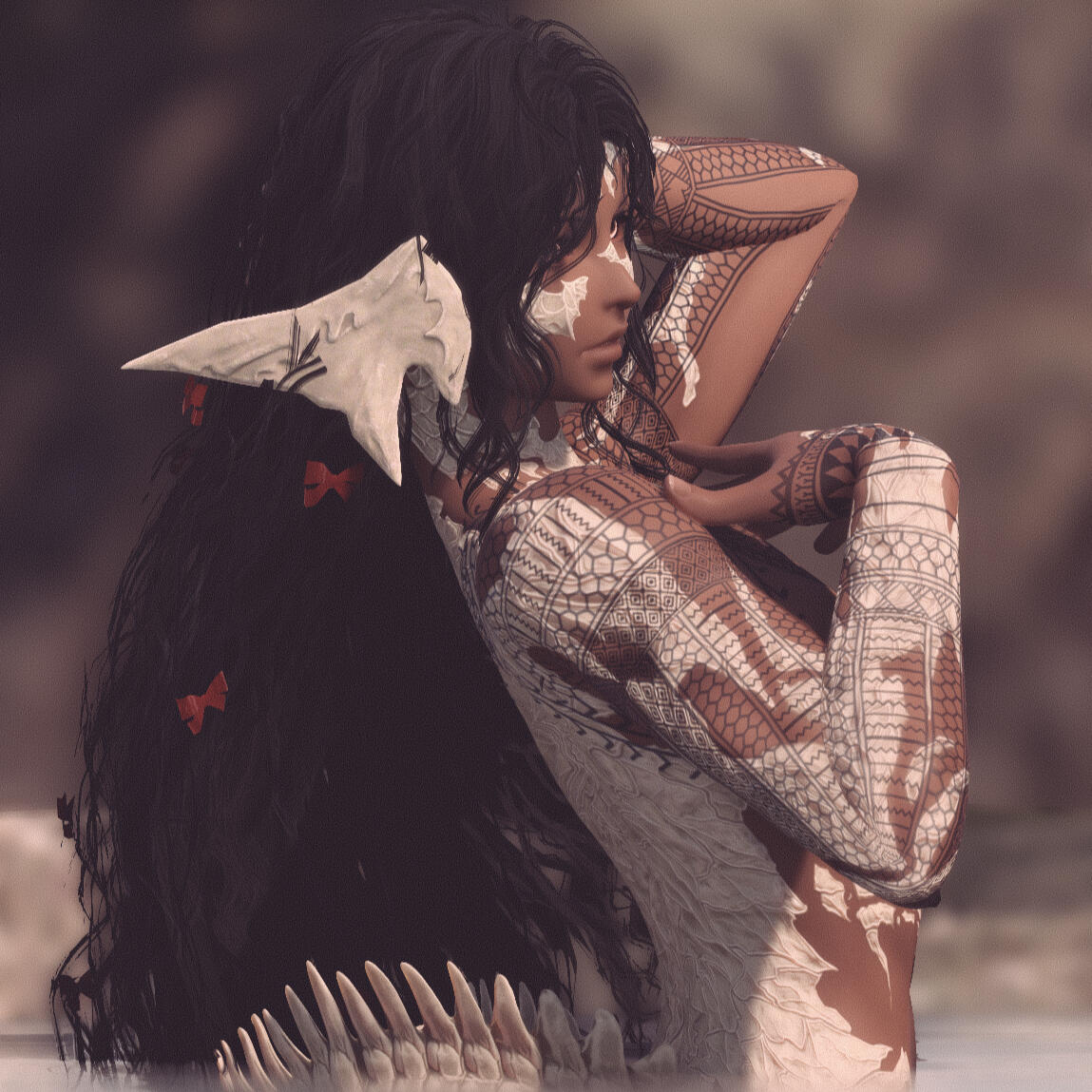
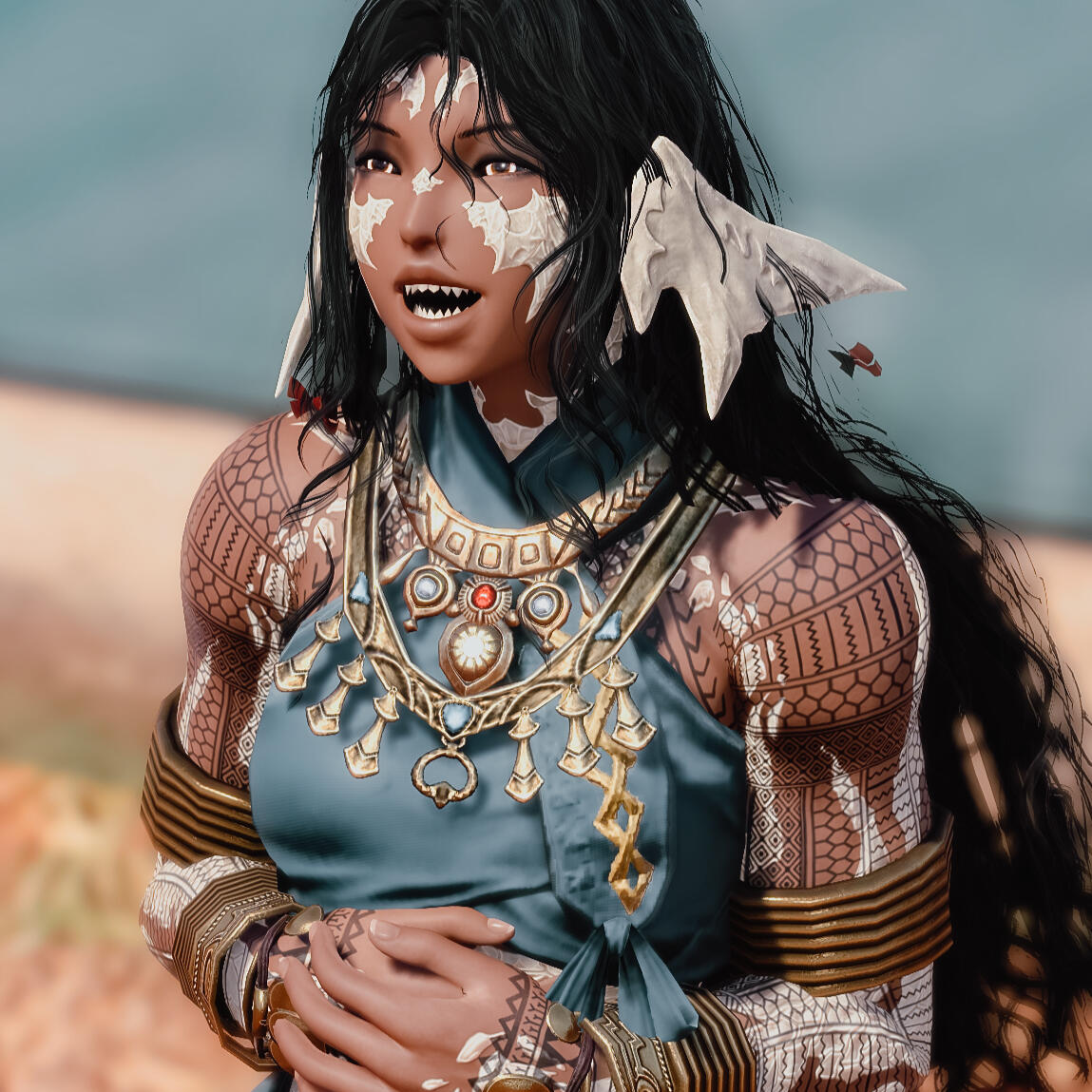
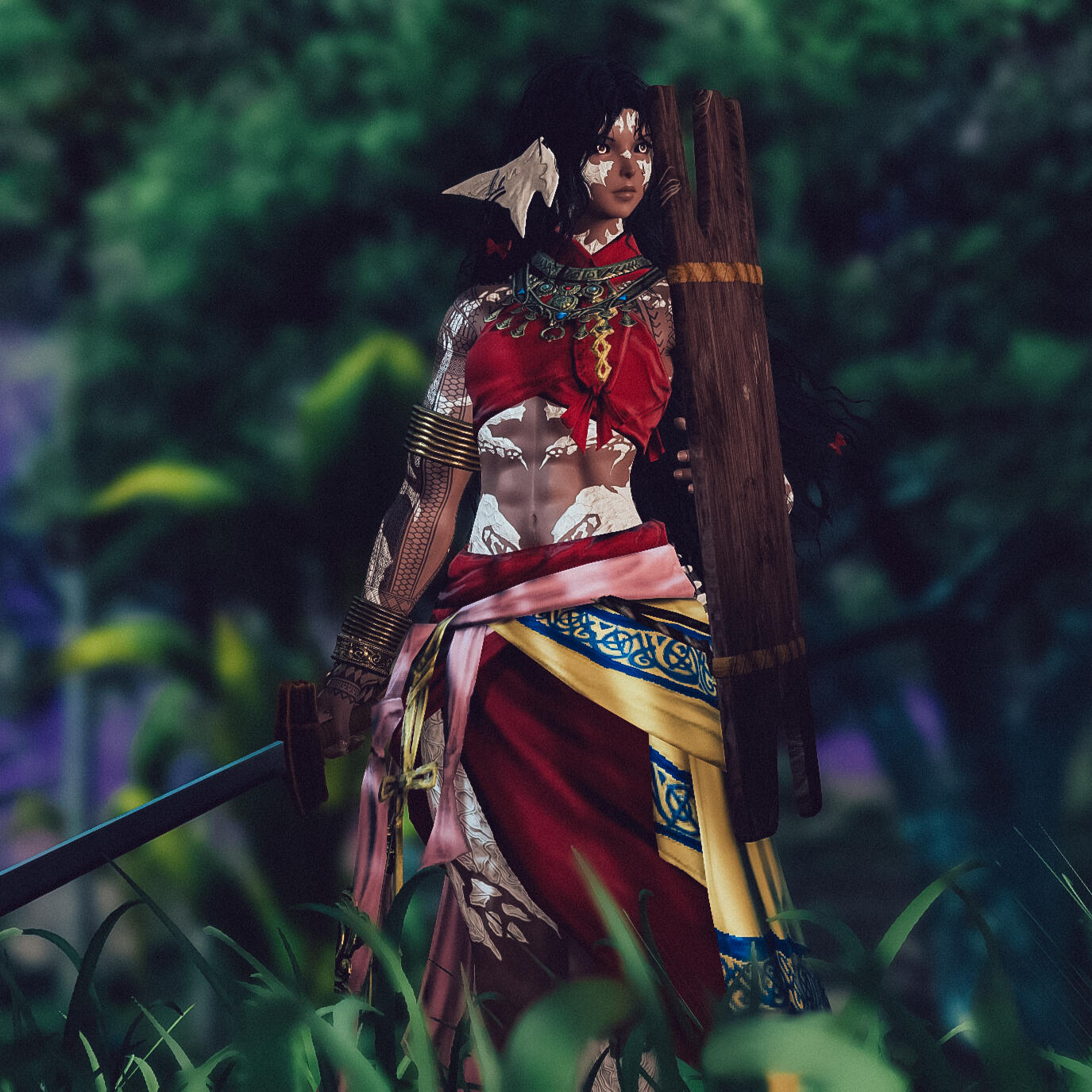
Anguna Archipelago
Far to the south of Thavnair is a series of seven large islands known to the locals as the Anguna Archipelago. Local legends say that it was once a singular land mass that was broken apart by a great cataclysm, the duel between Bakunawa the sea serpent and Haliya, the warrior. Bakunawa sought to devour the spirit of the moon, Mayari, in order to steal her radiance but she was thwarted by Mayari's sister Haliya.Their battle scarred the land and what was once a single large island became the Anguna Archipelago. It was named after the indigenous beastmen that lived on the island. These beastmen lived peaceful lives and were amicable with both the Hyur settlers who came first and the Raen who followed.The Raen of Anguna trace their lineage back to the group that followed Alzadaal Khan to Thavnair. While a majority of that group decided to settle in the island of Thavniar, another group decided to move further south and thus found themselves in the Anguna archipelago.
Both the Raen and Hyur learned from and adopted much of the culture of the indigenous Anguna though in modern times the majority of the population that reside on the islands are Raen and Hyur. The Anguna began to decline and eventually disappeared with very little explanation.There is constant trade between the islands and this reliance on each other has given way to a lasting peace though that does not been there haven't been times of conflict. The islands were mostly isolated until their accidental rediscovery by Nehir of Yedlihmad who kept her route a secret supposedly by the request of the Datu that saved her ship and crew.Generations later the route resurfaced and intrepid traders from Yedlihmad and Alnair began sailing to the archipelago and established steady trade relations. Because of this consistent trade, there are some Thavnairian influences in their culture like in their cuisine and use of titles such as Rajah for some leaders.
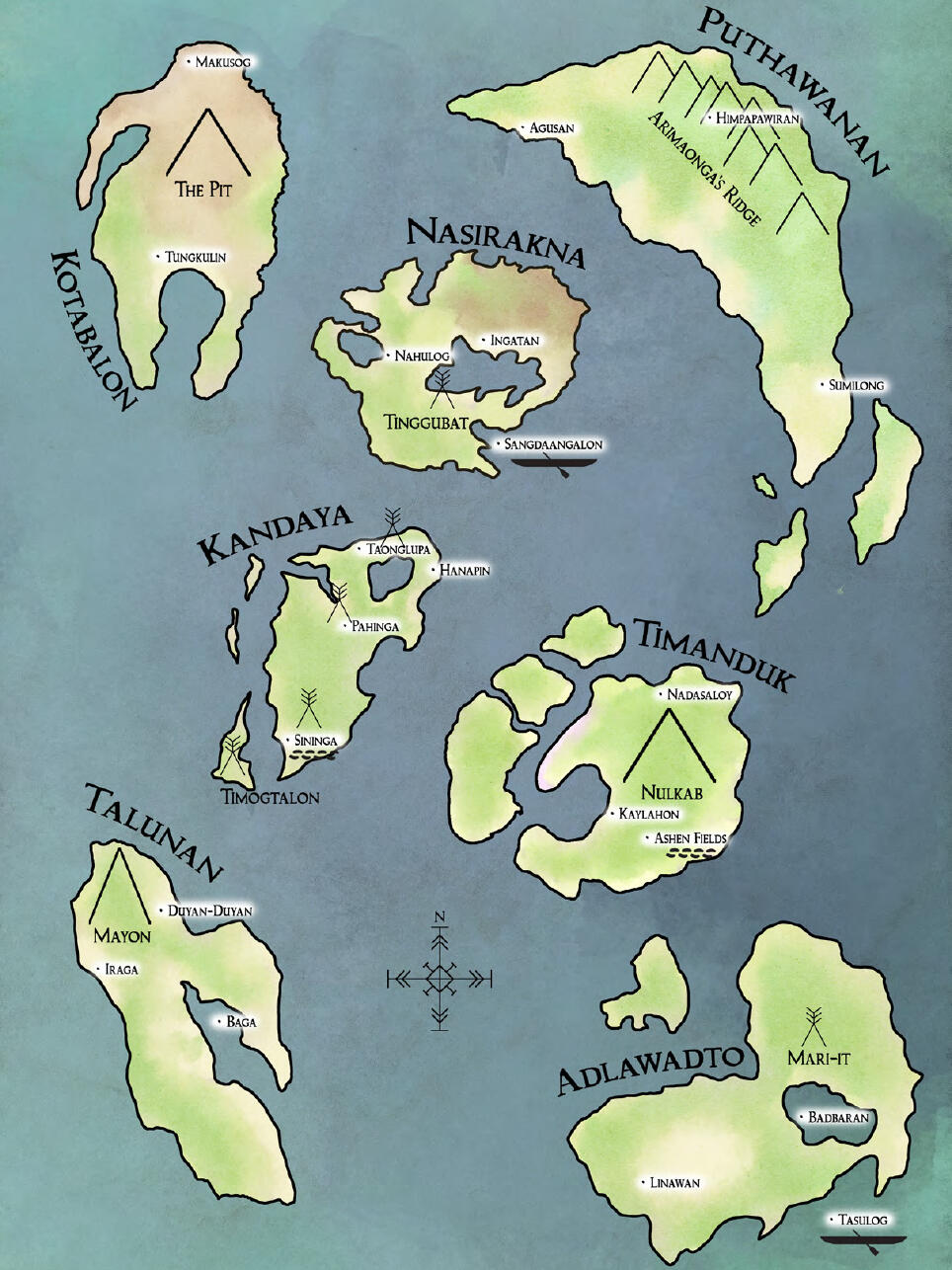
Art utilized is from Islands of Sina Una and is the sole intellectual property of the artist and authors.Lore and information are directly ported from the Islands of Sina Una with some modification to fit within FFXIV with Malaya and Katibay being headcanon islands.
Puthawanan
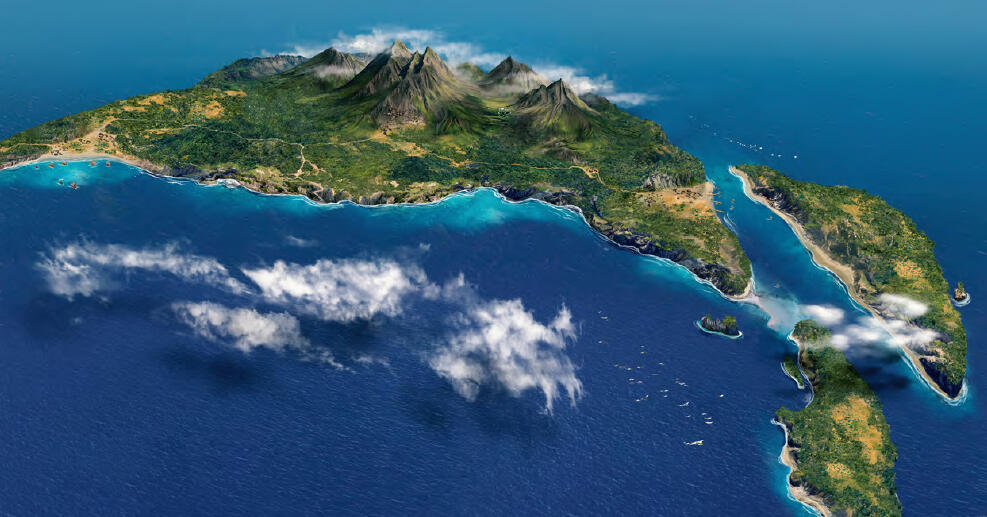
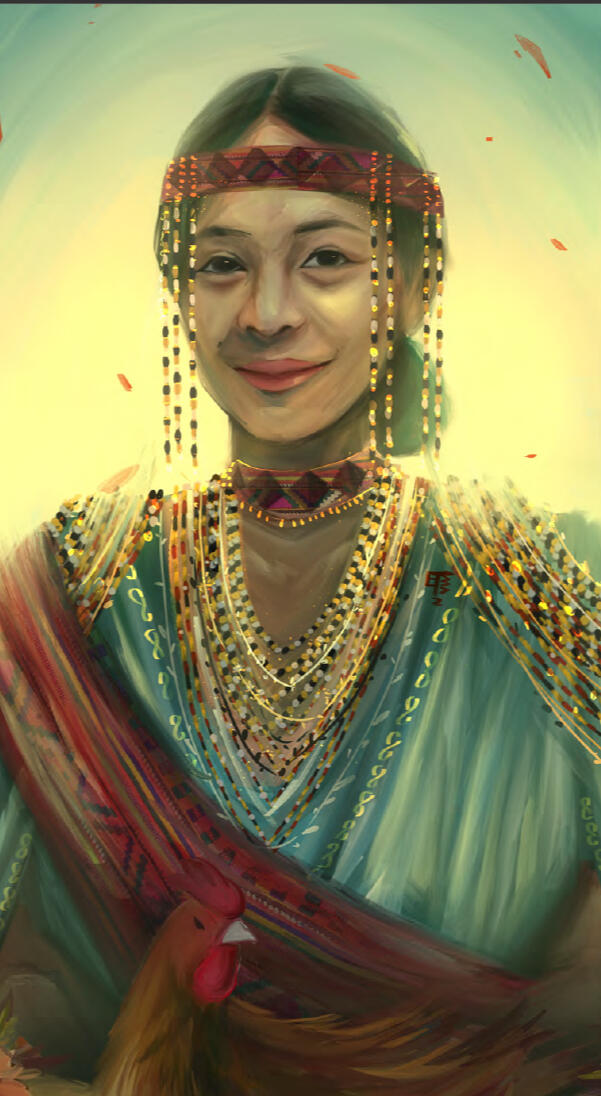
Puthawanan is one of the largest islands in the archipelago. Most villages upon this island learn to revere the spirits of Arimaonga’s Ridge. The Ridge cuts through the island of Puthawanan with a sword of finality, causing land travel to cross from either side to be difficult, although zig-zagging mountain roads have been built to help ease this.Additionally, the mountains are packed with plateaus which have cool and dry temperatures that travelers may find refuge in.Every once in a while, Arimaonga, the Lion Celestial Eater, breaks through the sky and runs across the mountains in its daily play. The giant lion’s footsteps severs chunks of the mountain off, revealing more deposits of iron ore. It has been one hundred years since this has happened.
The people of Puthawanan’s most abundant resource is iron along with rice. Their homes are the same as the huts of every other island: raised bamboo slat houses with roofs of cogon grass, save for the limestone houses of the southern villages.Poultry and pork are the main food, along with seafood and they follow the yearly season of harvests. In addition to mining, they’ve built terraces for farming and growing rice, and thus have become a central hub for travelers from both the city by the northwest shore and the southern tip.As the traders come back from trading with the rest of the islands during Habagat, the warriors leave for the jade house and gold statue isles up north. There, they plunder and gain treasure, which they bring back during the Amihan season and
give half of to the traders.There is major land trade with the mountain villages and cities. There is also trade with the two satellite islands, Malaya and Katibay. The region also has regular interaction with Thavnair through Yedlihmadi and Alnairi merchant sailors.
Art utilized is from Islands of Sina Una and is the sole intellectual property of the artist and authors.
Malaya
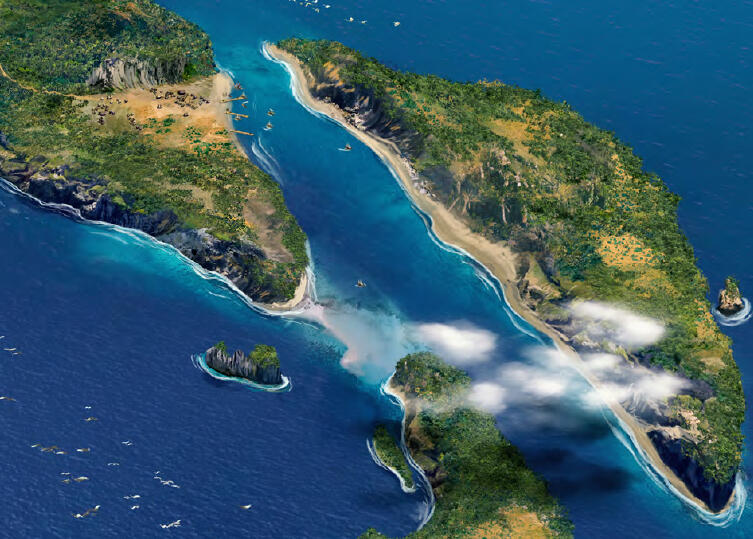
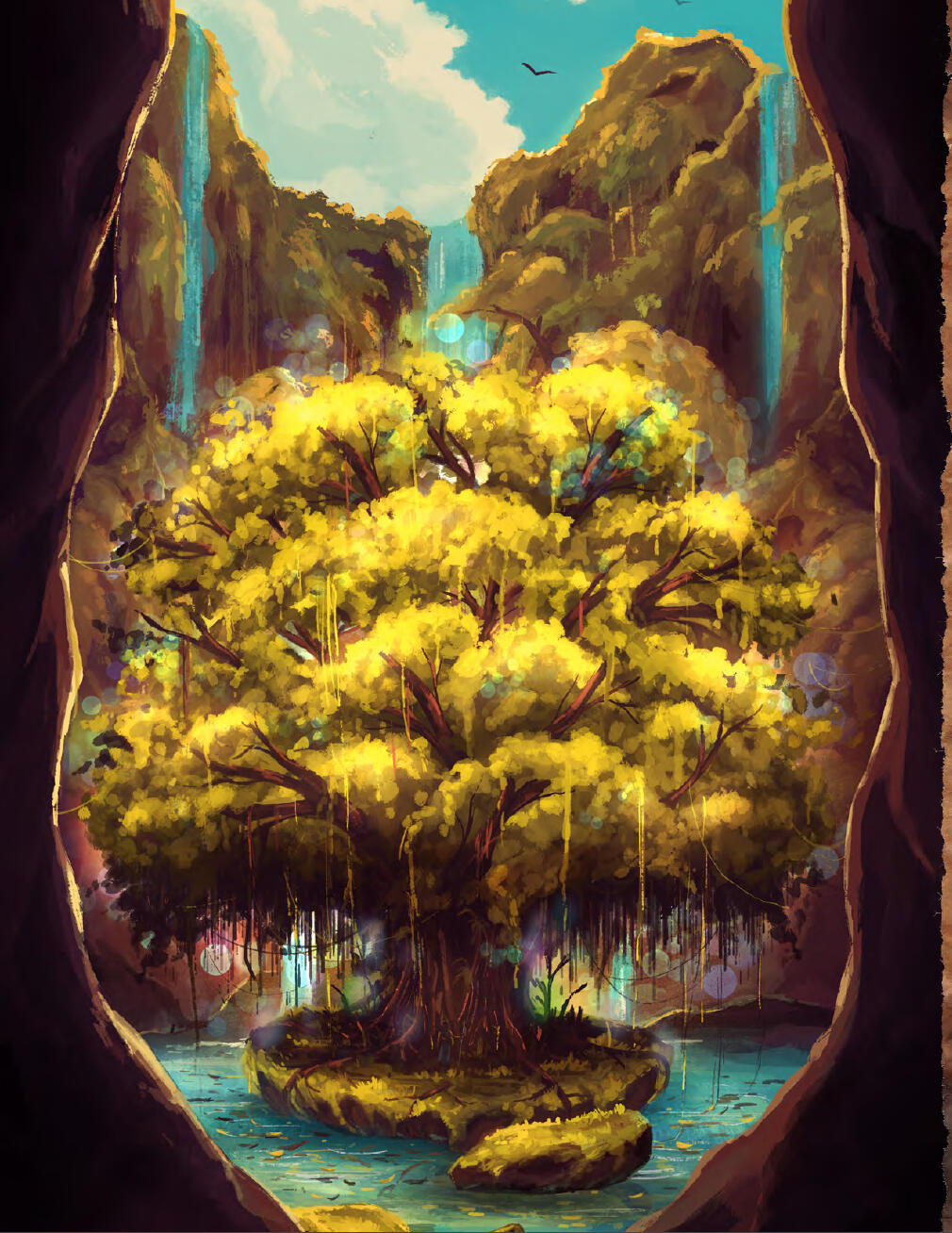
Malaya is one of the satellite islands located off the southern coast of Puthawanan. The largest settlement within Malaya is Tawalisi which acts as a trading hub for Malaya. Because of the flow of traders, Tawalisi is always bustling with activity. Traders from the other islands and even from Thavnair come to barter at the city's market and then while away their hours watching performances of traditional dances such as Tinikling.The island also holds the honor of being home to the Balete Tree of the Puthwanan region. While not as large as the Balete of Timaduk, it is no less important. The Belete is a tree shrouded in myth and superstition, its towering appearance belies a thin curtain separating the mortal world from the realm of the spirits. There is speculation that Balete trees can connect not just to the spirit realm but also to physical regions on Etheirys with Malaya's Balete supposedly connecting to an island filled with supernatural creatures.Babaylan, shamans, from Puthawanan proper and Katibay make pilgrimages to Malaya's Balete to perform particularly difficult rituals. Additionally, prior to any major sea raid or battle, people will gather to make large sacrifices and they even hold entire feasts before the Balete to preemptively thank the spirits for a victory.Malaya is also known for producing renowned warriors hand picked to work directly under the Datu called Maharlika.
These warriors serve as protectors of the land and are expected to lay down their lives in defense of the island. Their most honored duty is the protection of the island's Balete Tree. Those assigned to protect the tree are regarded as the best of the best among the warriors of not just Malaya but region of Puthwanan. Malaya also has an agreement with the Datus of Katibay and the Lakan of Puthawanan proper to send their Maharlika should a crisis arise that requires them.While Malaya also has rich iron deposits, its mining industry is second to its fisheries in terms of major sources of trade.
Art utilized is from Islands of Sina Una and is the sole intellectual property of the artist and authors.
Language
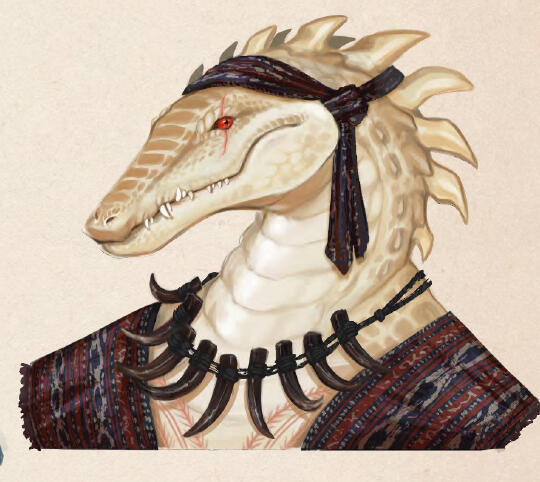
There are a few languages spoken in the Anguna Archipelago but have all fallen into the category of "Angunan" since that was the name prescribed to it by the Thavnairian traders that do business there. "Angunan," is a more of a blanket term used by outsiders. More often than not, when a Yedlihmadi is talking about "Angunan" they are referring to the most widely spoken language of the archipelago, Wikang Balete.Roughly translating to "language of the tree," Wikang Balete was the language spoken by one of the more dominant tribes of Anguna, the indigenous crocodile-like race that used to live on the island. Due to their larger numbers among the islands, this was the most commonly adopted language by the settlers and became a lingua franca for the archipelago as a whole.
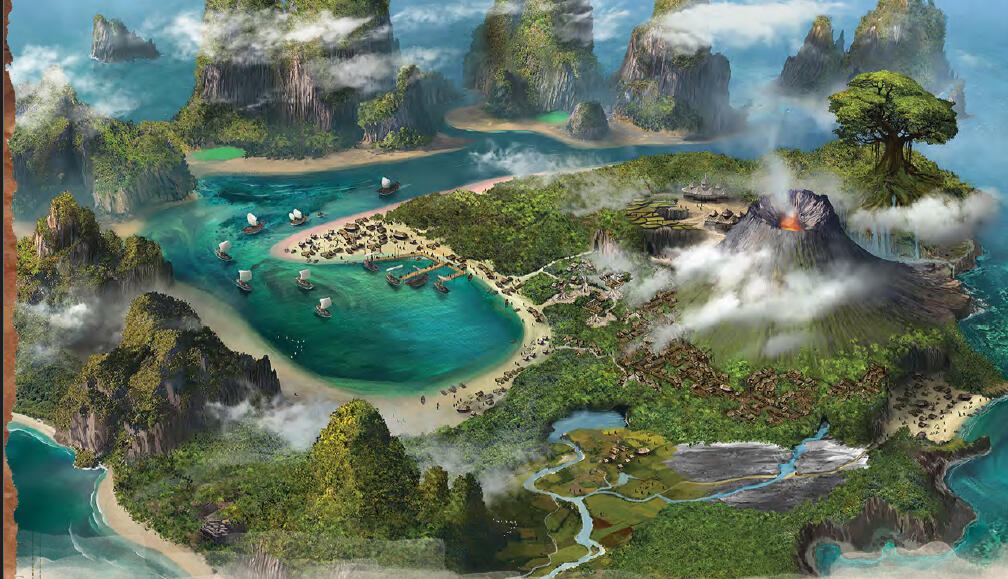
Art utilized is from Islands of Sina Una and is the sole intellectual property of the artist and authors.
Examples of Wikang Balete
Kumusta - A casual greeting.
Maligayang pagdating - Welcome.
Salamat - Thank you.
Maraming Salamat - Thank you very much.
Mandaragat - Seafarer / Sailor
Datu - A chieftain - usually the head of a large village or even a city on certain islands.
Lakan / Lakambini - The name for the head rulers of the region of Puthawanan. Akin to a king and queen.
Babaylan - Shamans. Spiritual leaders of their people, they are the conduit between the peoples of Anguna and the spirit world.
Wikang Balete is mostly Tagalog coded with some words borrowed from other languages such as Visayan.
Residents
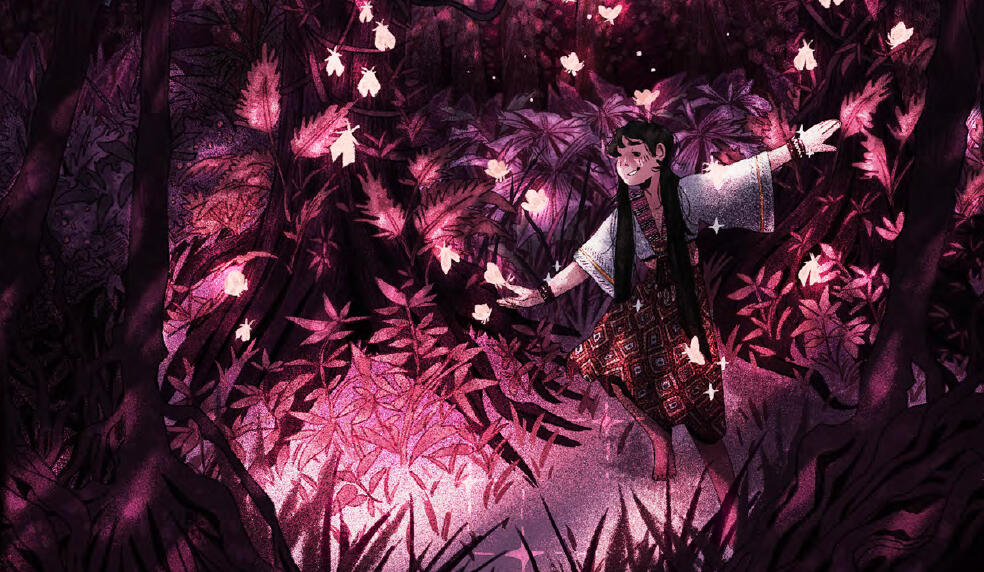
Art utilized is from Islands of Sina Una and is the sole intellectual property of the artist and authors.
The Anguna Archipelago is home to a myriad of creatures and peoples both mortal and supernatural. After the disappearance of the native Anguna, the dominant populations of the islands are that of the Raen and the Hyur. Following them are others who were thought to be unique to the region until the existence of Bisaya island near the Ruby Sea was discovered. A few examples of the residents of the island include:
Balubid - A Raen variant characterized as having more numerous and thicker scales when compared to their Thavnairian and Othardian cousins. They also posses large tails, sharp teeth, and the ability to store nutrients in their tails for long journeys or hunts. Of the two Raen variants that live on the archipelago, they are the most numerous.
Bayawak - A Raen variant known for being larger and stockier than the Balubid. They are also almost fully covered in scales and have sharp claws as well as sharp teeth. They are known for their physical strength and resilience. Like the Balubid, they can also store nutrients in their tails.
Lumad - The name of the local Hyur, descendants of the ones who first landed on the island. Their origins have been lost to time and the archipelago is all they know. Bucking the trend of the rest of the star, the Lumad are actually outnumbered by the Balubid and Bayawak in terms of population.
Katataohan - One of the many types of shapeshifters that live on the island. Often met with distrust due to their association with Bakunawa, the Celestial Eater, they tend to live in their own communities. That being said, it is not unheard of for a Katataohan integrate themselves into society. Though how much of their nature they reveal varies from person to person. They are unique in that they shift mostly between a Hyur-like form and Raen-like form. It should be noted that Katataohan are not aswang.
Aswang - A blanket term for varying shapeshifters that confound classification. They can be the bane of hunters as it is not uncommon for them to prepare for the wrong kind. Their kinds are as varied as people and so are their motivations and morals. Unlike the Bisaya aswang, the Anguna aswang are purely malicious.
Musang - Though they resemble Miqo'te, Musang, or Civets, are actually unique to Anguna and Bisaya Island. They are nimble and posses a musk that is either pleasant or repulsive. How it is perceived varies from person to person. They also have rounded ears and striped tails.
Dambuhala - Now a rare sight, Dambuhala is a blanket term for the giants that inhabit the islands. Mostly keeping to themselves and distrustful of others, they tend to live in the most remote areas that are difficult to reach. At times, their handicrafts can be found on the islands such as their gathering baskets which is almost always treated as a bit of a spectacle.
Tamawo - Spirit beings that live in a singular tree that are often cared for by apprentice Babaylan. Offerings are sometimes left at base of the tree to try and convince the resident Tamawo to provide some of their spiritual visions. Their mortal forms are known to be beautiful but can easily be discerned as a Tamawo as they do not possess a philtrum.
Bantay Tubig - The blanket term for the merfolk that live around the waters of the archipelago. Clashes between merfolk and land-dwellers are common and distrust of the other exists on both sides. However, there are some villages, such as Tawalisi, that have managed to co-exist with the merfolk. This results in special markets that appear in shallow waters wherein the merfolk sell their wares that include rare fish and pearls for gold.
Lore and information are directly ported from the Islands of Sina Una with some modification to fit within FFXIV. Some names and classifications are headcanon.
Animism and Spirits
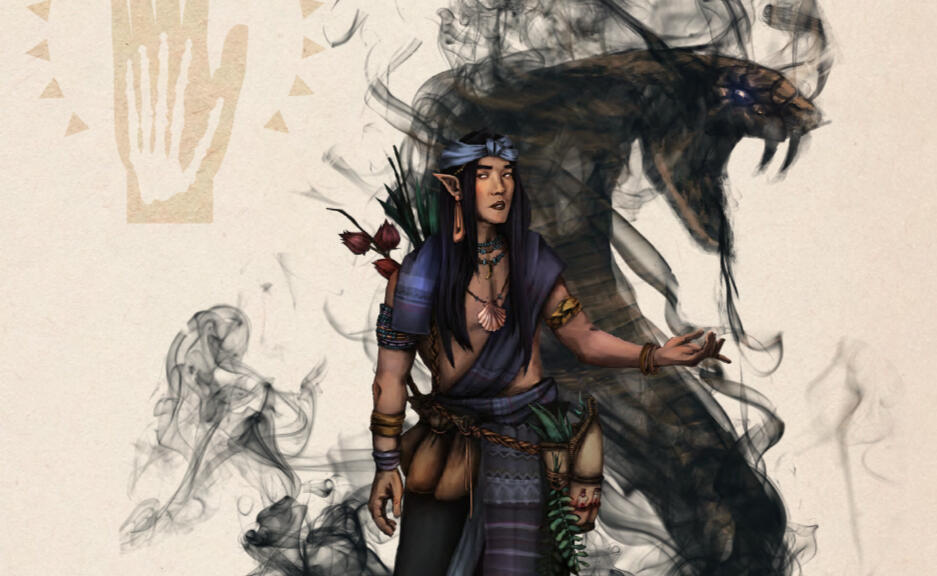
Art utilized is from Islands of Sina Una and is the sole intellectual property of the artist and authors.
When the term “spirit” is used among the people of the islands, they are seldom referring to wraiths or other malicious permutations of undeath. Rather, they are talking about spirits in the context of animism: the belief that every element of life — every rock, tree, creature, and even natural phenomenon—is inhabited by an animating soul.Animism is central to islands’ way of life. People recognize the impact these spirits have on their daily existence, and strive to live in harmony with them. Regular offerings and praise from mortals earn protection and aid, while indifference or iinsults invite misfortune or disaster. Babaylan, important guides who have an affinity for these spirits, are called to intercede with them on behalf of their communities.Just as we interact with the peoples of our world, our characters can befriend, trick, entreat, betray, or worship the spirits that they meet.Each household is watched over by its own ancestral spirits. Rather than being undead, they are simply souls whose physical bodies have deteriorated. Despite their transition to the afterlife, their personalities endure. Relatives continue to treat them as valued family members, regularly asking them for advice and protection. Some are even able to negotiate with deities and other spirits on behalf of the living.
Ancestral spirits usually make themselves known by possessing willing hosts or images carved in their likeness, sometimes communicating with their descendants through dreams. On very rare occasions, they choose to return to the mortal world. These spirits — known as umalagad — incarnate in new bodies, their old forms long gone. Many ancestral spirits are said to return as Bayawak.Spirit houses and altars laden with gold ornaments, betel nut, wine, or even the blood of a slain chicken can be found in or near every settlement. These earthly gifts are placed in coconut shells, metal bowls, or earthenware and presented to the spirits. Different spirits prefer different offerings, but salt and spices are usually avoided, as most spirits find them distasteful.Festivals featuring music, dances, and feasting are also held in honor of local spirits. During these celebrations, which are often tied to the seasons, the people thank these entities for their continued blessings. A satisfied spirit might grant the boon of a bountiful harvest, or show its displeasure with drought and pestilence.Animists of the islands have a direct relationship with spirits based upon mutual exchange. Whether they desire victory in battle, a cure for an illness, or favorable weather, they must give physical objects in return for these blessings.
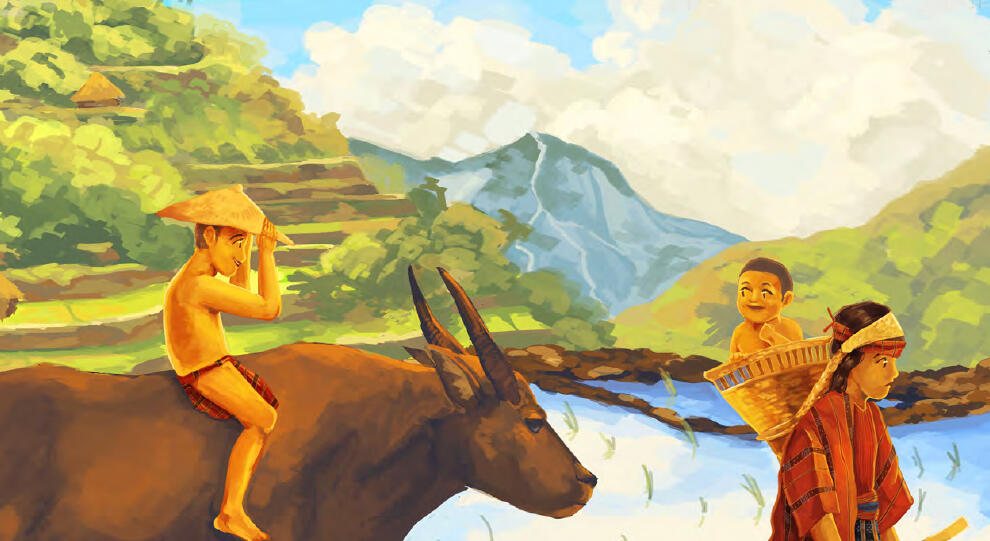
Art utilized is from Islands of Sina Una and is the sole intellectual property of the artist and authors.
Lore and information are directly lifted from the Islands of Sina Una with some modification to fit within FFXIV. Some names and classifications are headcanon.
The Gods
Art utilized is from Islands of Sina Una and is the sole intellectual property of the artist and authors.
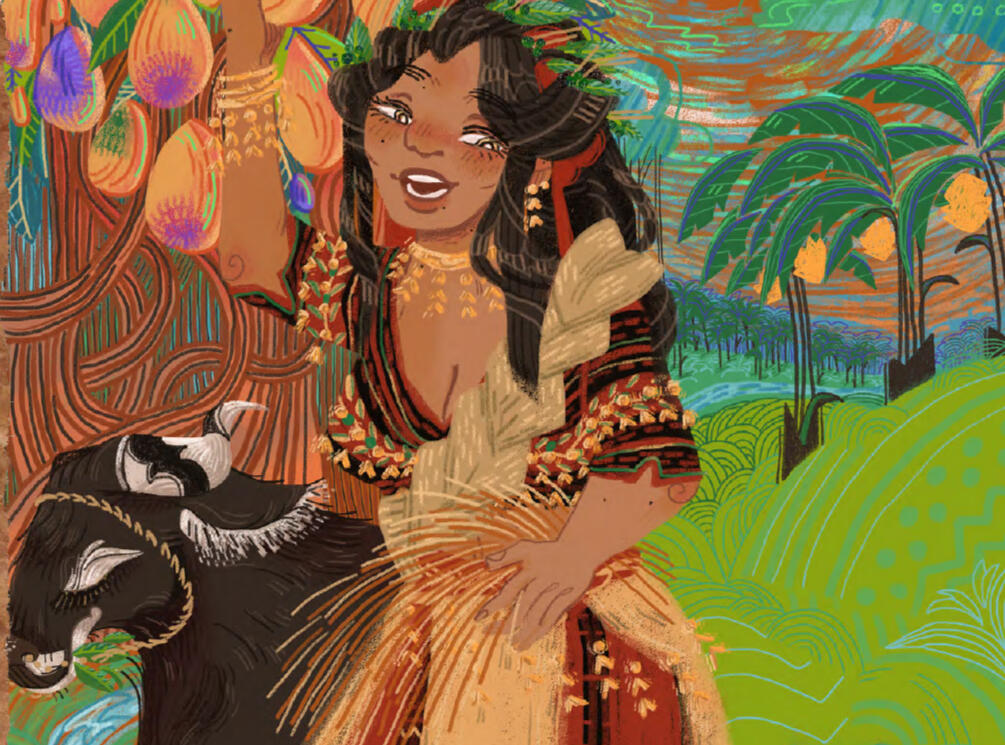
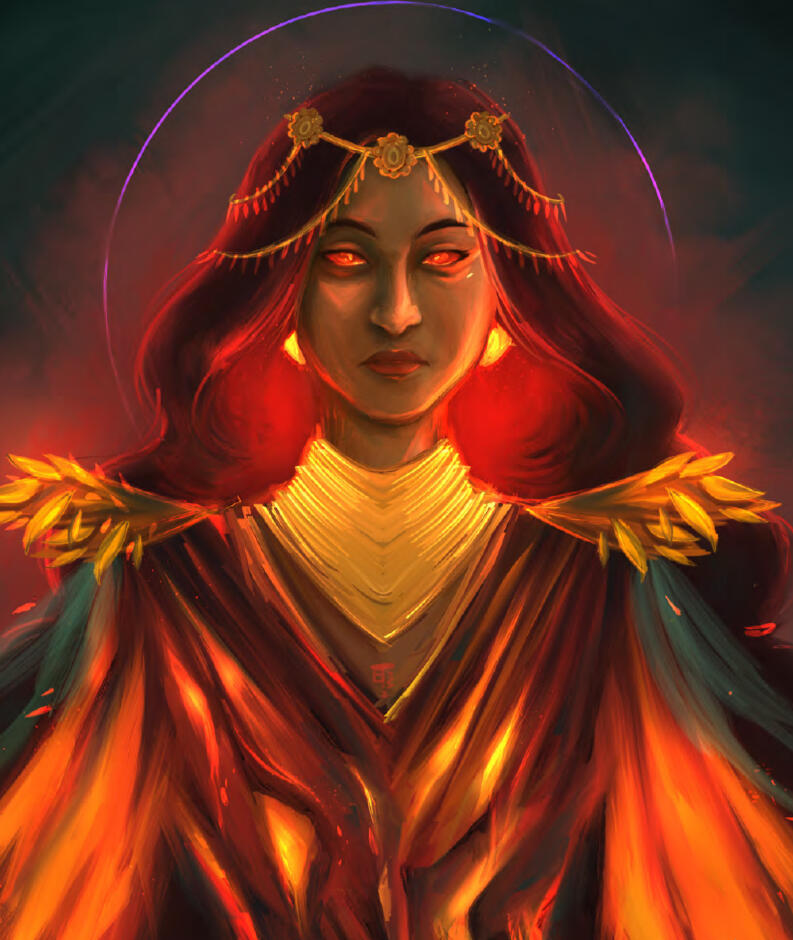
The people of the Anguna Archipelago have their own pantheon of gods that they worship. In the islands, gods are not omnipotent beings or supreme masters of the world. Rather, gods are large and powerful spirits, whose presence has grown to encompass universal elements of life. Constant natural phenomena like the earth and sky, as well as inevitable happenings like loss and death, are all represented among the deities of the islands. They are not seen as above the foibles of mortals such as anger and jealousy. Just as the gods have the ability to show favor, they can also show their dissatisfaction and often this is to devastating effect.
The there is a great number of deities worshipped in Anguna. A few of them include:
Bathala - Known as the creator of all things and god of the sky. He is the father of gods such as Apolaki, Mayari, Tala, and Hanan. He is known to take joy in creation and despite his power is respected rather than feared. Those seeking justice ask Bathala to help them find a solution that prioritizes healing the community rather than punishing the offender. If he deigns to help, he will then send small birds called tigmamanukan to gather information for him.
Lore and information are directly lifted from the Islands of Sina Una with some modification to fit within FFXIV. Some names and classifications are headcanon.
Apolaki - The spirit of the sun. He grants light when he awakens in the east and heralds the coming of night when he retires for the evening to the west. He was once in conflict with his sister, Mayari, for dominion over the sky but eventually agreed to split their influences with Apolaki minding the sun and Mayari the moon.
Mayari - Eldest and wisest of Bathala's triplets with a mortal woman. She is known for her beauty and radiance as well as her dominion over the moon and night sky. Her beauty is what drove Bakunawa's jealousy and greed.
Tala - Second oldest of the sky triplets, Tala was given the stars by Bathala. Being the spirit of the stars, she often guides those lost on a winding road or on the open ocean. She alone draws the stars into constellations or rubs clouds out so people can see the stars. She also occasionally sends comets to streak across the sky as a sign of her appreciation for being given the stars.
Hanan - Youngest and most tempered of the sky triplets. She is the minder of dawn and minds the sky until Apolaki awakens. Hanan embodies new beginnings and fresh starts.
Lakapati - Lakapati is the intersex goddess of harvests and fertility. She is the mother of Anagolay, spirit of lost things, and both are known for their benevolence and beauty. Lakapati is compassionate, giving the gift of agriculture so that communities would be able to provide for themselves.
Amanikabli - Amanikabli is the swift and decisive god of the hunt. He is tied to no specific location and instead spends his days roaming in search of his next challenge. He is a restless and persistent god, dedicated to his craft.
Magwayen - Magwayen is not the goddess of death, but rather the goddess of the transition between life and death. It is her duty to ferry the souls of the recently deceased to the underworld. She is plainspoken and practical, her hands calloused and rough from work.
Lalahon - Lalahon is the goddess of volcanoes. She has the capability both for great destruction and creation. Lalahon can send plumes of smoke and ash into the sky, blotting out the sun and making for a poor harvest. However, the same ash that blocks the sun then falls to the fields and fertilizes the soil. She can create torrents of lava that ruin whatever crosses their path. However, this lava cools into obsidian, which can be fashioned into tools.
Ribung Linti - Ribung Linti is the god of lightning and thunder. He is an agile and active god who dances his way across the sky. Each step lands like a bolt and his joyful laughter rumbles even down to the earth. Though easy-going, Ribung Linti is not careless. He darkens the sky and sends thunder to warn people that a storm is coming so that they may seek shelter.
Art utilized is from Islands of Sina Una and is the sole intellectual property of the artist and authors.